This issue contains the following articles: Case Study: Natural Gas Fueled Building Explosion - Youngstown, OH, Preparing for Hurricane Season, Damage Prevention - How Do We Keep Pipelines Safe?, and Is Your Department Prepared for a Pipeline Emergency?
This issue contains the following articles: How Landslides can Damage a Pipeline, Responding to a Pipeline Emergency in a Recreational Area, LEPCs and Emergency Planning Involving Pipelines, and The Importance of Communication between Emergency Responders and Pipeline Personnel During an Incident.
This issue contains the following articles: Emergency Response Tactics for a Natural Gas Incident, How to Identify and Respond to a Suspected Pipeline Leak, Tailboard Scenario: Responding to a Terminal Incident, and How do In-Line Inspection Tools Work?
This issue contains the following articles: Responding to Pipeline Emergencies, Value of Participating in Joint Emergency Response Drills, Innnovations in Emergency Responder Technology and Human Damage to Facilities.
This issue contains the following articles: Responding to a Natural Gas Incident in a Highly Populated HCA, Case Study of LNG Incident in Plymouth, Washington, Mitigating a Boiling Liquid Expanding Vapor (BLEVE) Explosion and Featured Best Practices from Your Emergency Responder Peers.
This issue contains the following articles: Tailboard Scenario: Responding to a Tanker Truck Spill, Responding to a Products Pipeline Release During an Earthquake, Overview of Pipeline Markers and Understanding the Different Types of Pipelines.
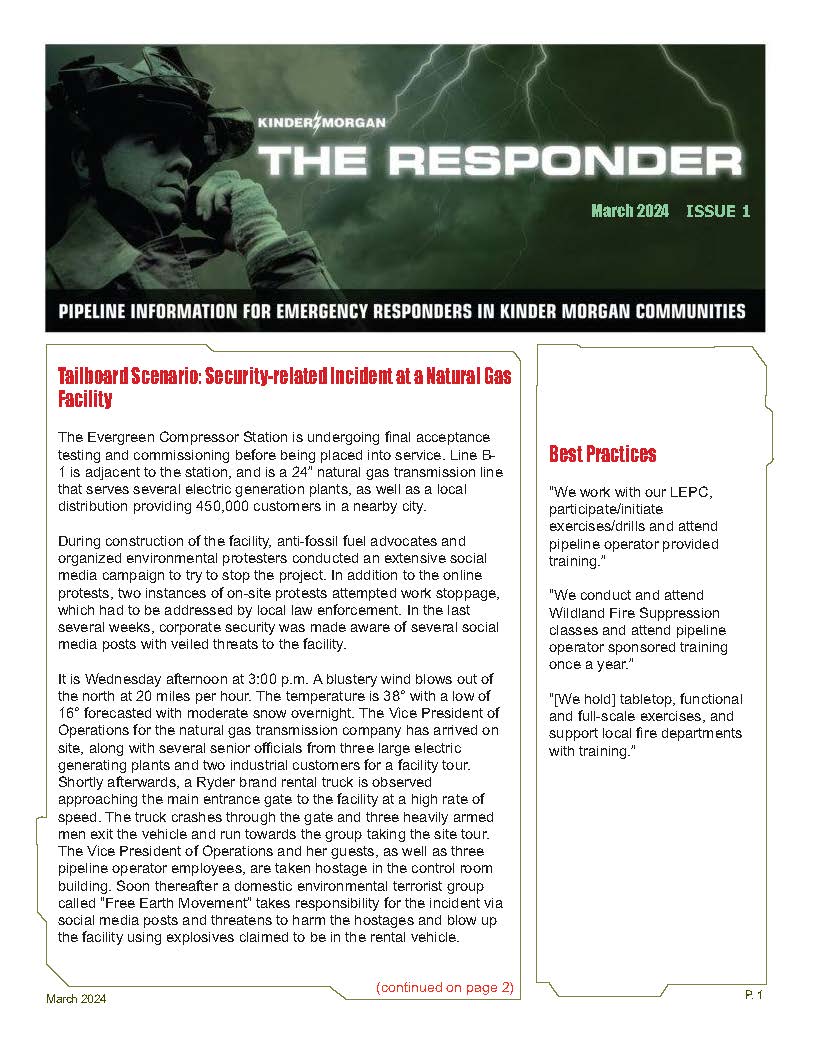
This issue contains the following articles: Tailboard Scenario: Security-related Incident at a Natural Gas Facility, What is a Compressor Station?, Pipeline Emergency Response Resources for Emergency Responders and Public Officials and How Does a Control Center Work?
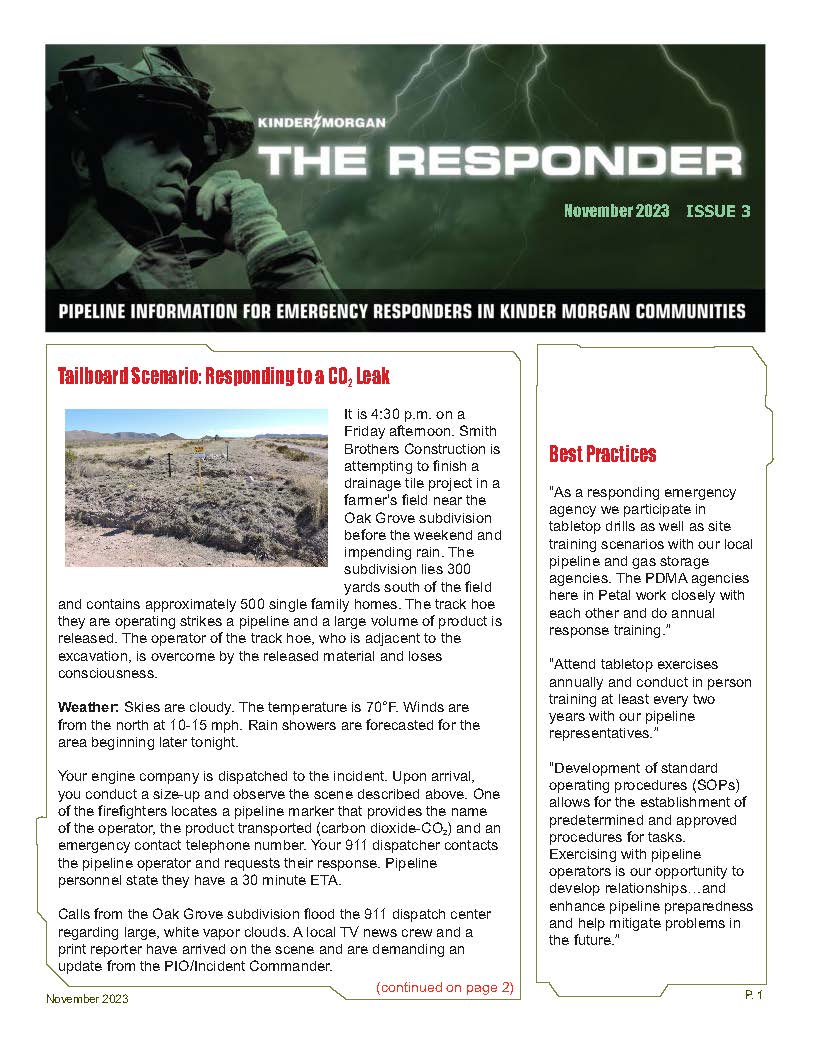
This issue contains the following articles: Tailboard Scenario: Responding to a CO2 Leak, Land Use Planning and Local Government's Role in the Process, Inline Safety Inspection Tools, and Commodities Transported via Pipeline and Evacuation Distances.
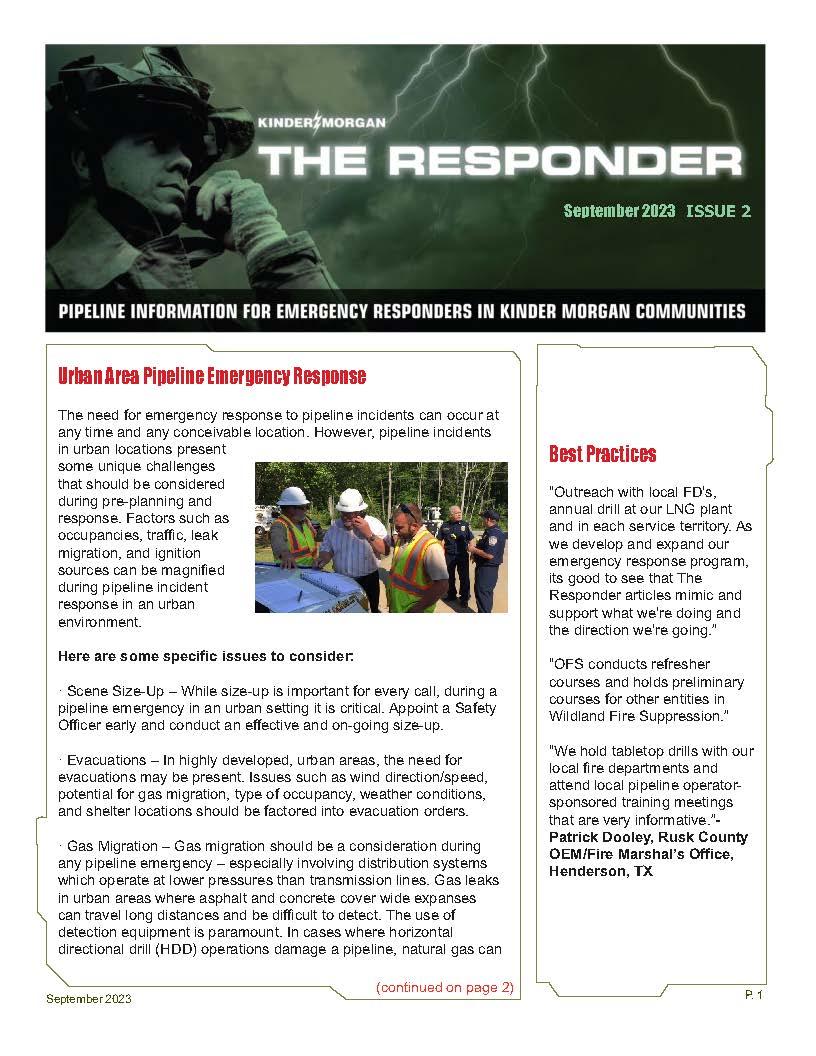
This issue contains the following articles: Urban Area Pipeline Emergency Response, Creating Fire Breaks Near Pipeline Facilities, First Responder Training Video Series, Understanding Different Types of Pipelines, and Tailboard Scenario: Responding to a Natural Gas Storage Incident.
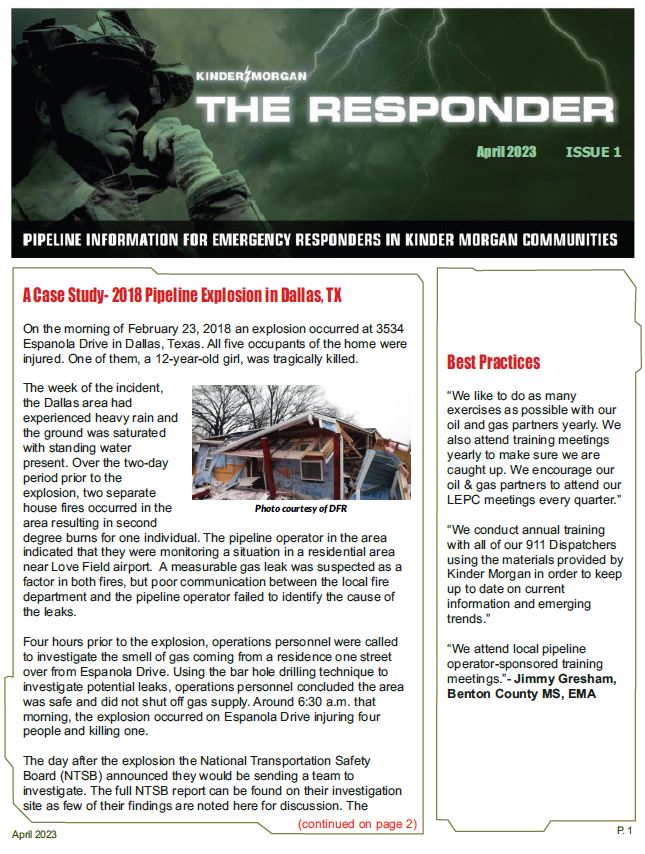
This issue contains the following articles: A Case Study - 2018 Pipeline Explosion in Dallas, TX, What Are Pipeline Valves and How Do They Work?, Lessons Learned from the Responder Annual Readership Survey and Overview of BUXUS Program
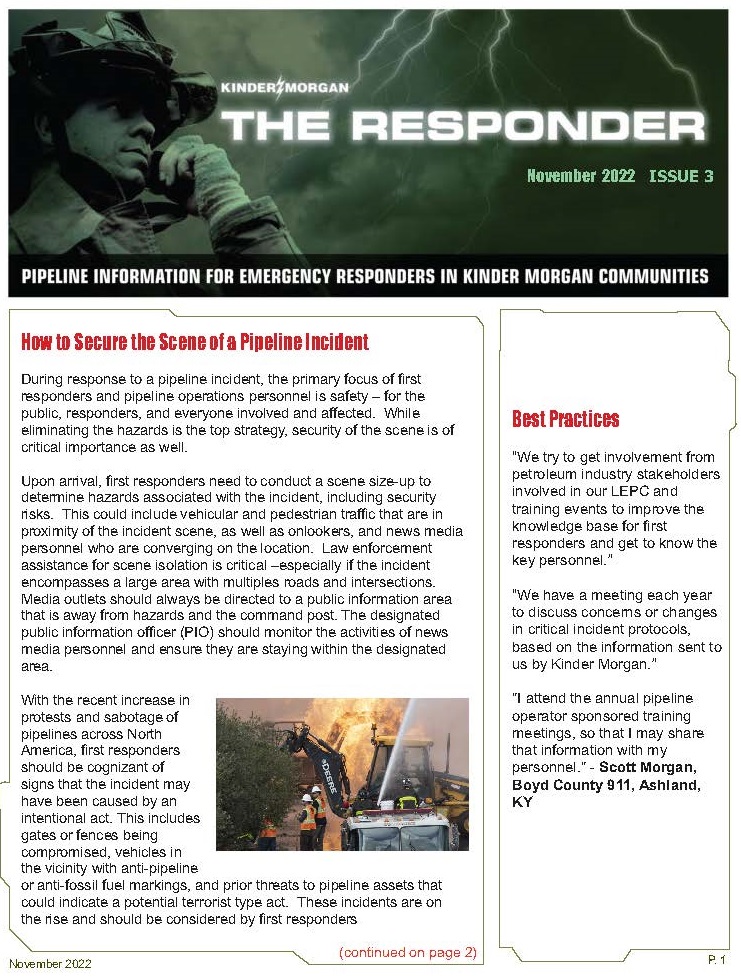
This issue contains the following articles: How to Secure the Scene of a Pipeline Incident, LEPCs and Their Role in Emergency Response Planning, First Responder Training Video Series, Tailboard Scenario: Responding to a HVL Pipeline Incident and Safe Approach to an Active Pipeline Incident.
This issue contains the following articles: Tailboard Scenario for a Natural Gas Incident, Joint Training Opportunities between Pipeline Operators and Emergency Responders, What is a Control Center and How Does it Work and Damage Prevention Programs - Keeping Our Pipelines Safe,
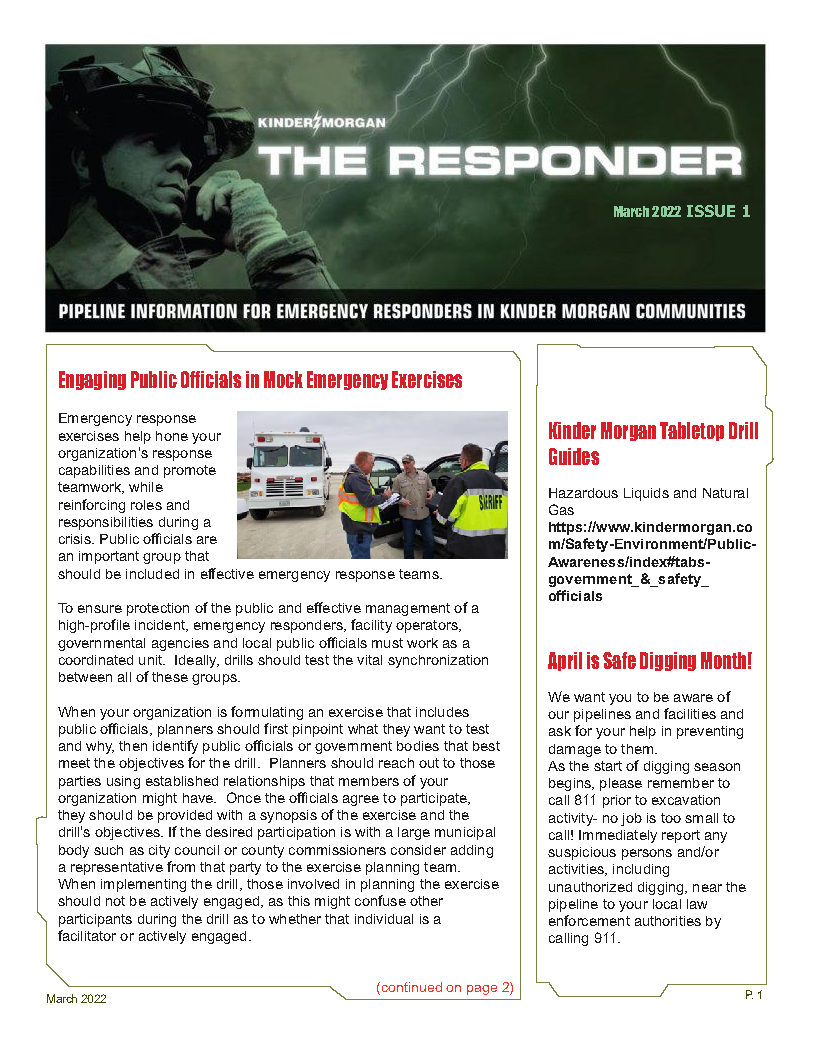
This issue contains the following articles: Engaging Public Officials in Mock Emergency Exercises, How Social Media is Changing Emergency Response, What Goes into Constructing a Pipeline and CO2 Pipeline Operations and Emergency Response.
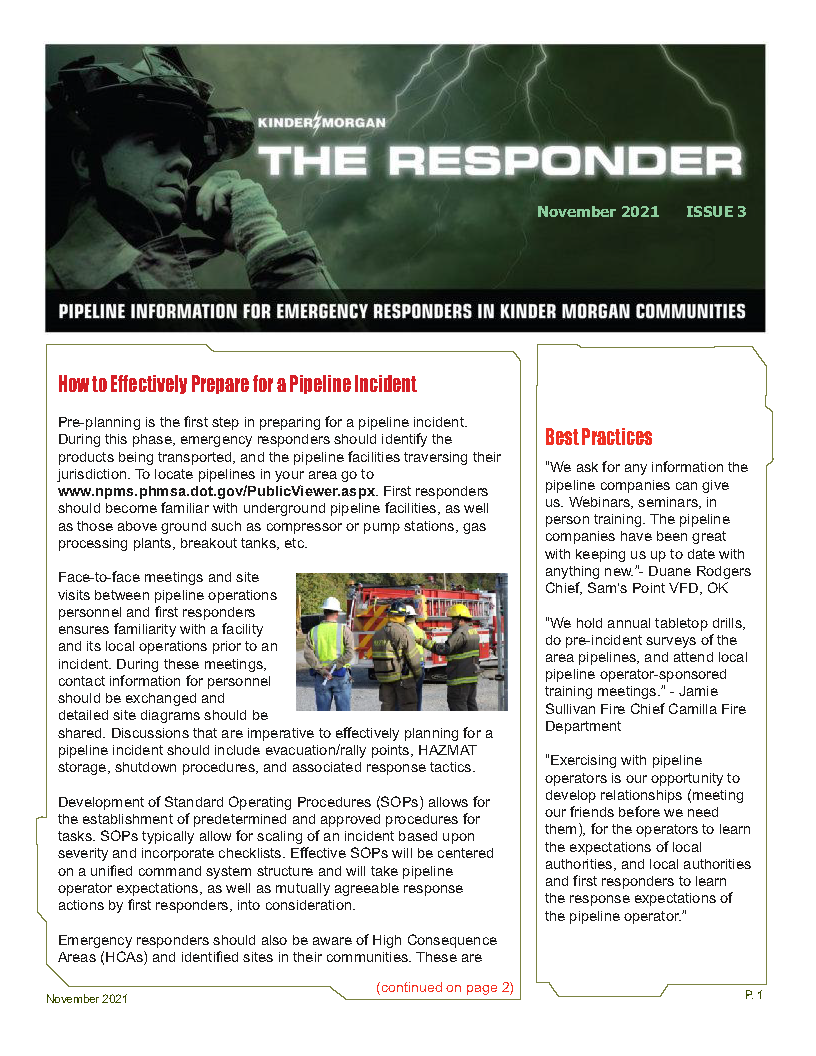
This issue contains the following articles: How to Effectively Prepare for a Pipeline Incident, Pipeline Emergency Response Tactics, Case Study of Sabotage – A Growing Risk to Critical Infrastructure, and Emergency Responder Spotlight- Fairfax County, VA Fire and Rescue.
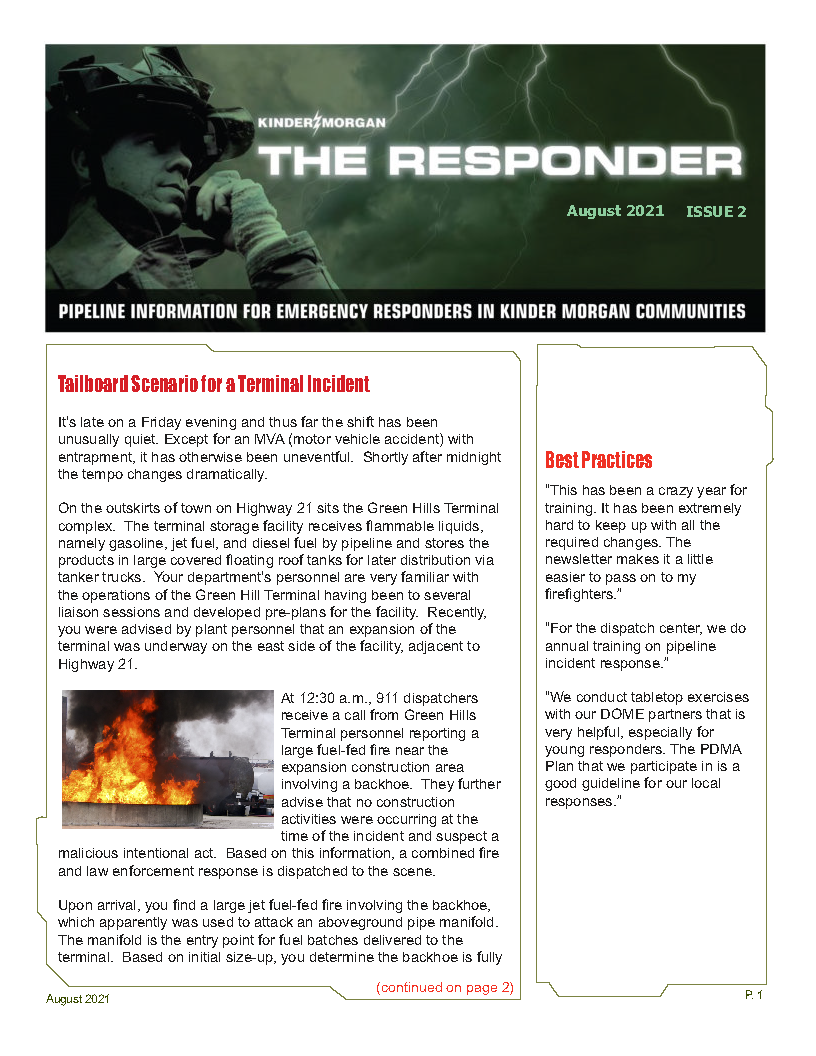
This issue contains the following articles: Tailboard Scenario for a Terminal Incident; Effective Scene Size Up at a Natural Gas Incident; Characteristics of Natural Gas, Refined Products, CO2, and HVLs; HCA’s and Identified Sites in Your Community
This issue contains the following articles: Preparing for a Pipeline Emergency as the Result of an Earthquake; Establishing an SOP for Pipeline Emergencies; Local Government's Role in Risk-Informed Land Use Planning; Phishing Attacks Target Local Governments and Organizations
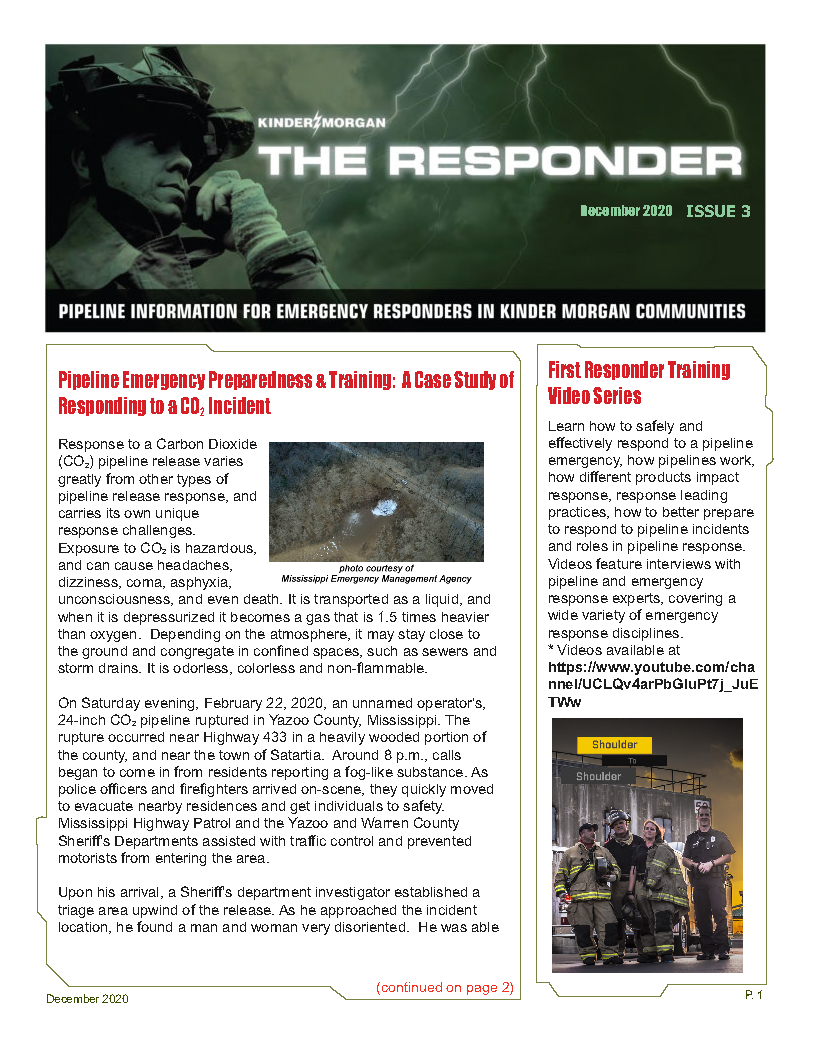
This issue contains the following articles: Pipeline Emergency Preparedness & Training: A Case Study of Responding to a CO2 Incident; Pipeline Emergency Response Tactics: Investigating Root Cause Pipeline Incidents involving Metallurgical Analysis; Overview of Pipeline Systems: Gathering Pipelines; Keeping Pipelines Safe/Practices & Protocols: Emergency Response Liaison and Incident Response in a COVID-19 World; Best Practices; First Responder Training Video Series
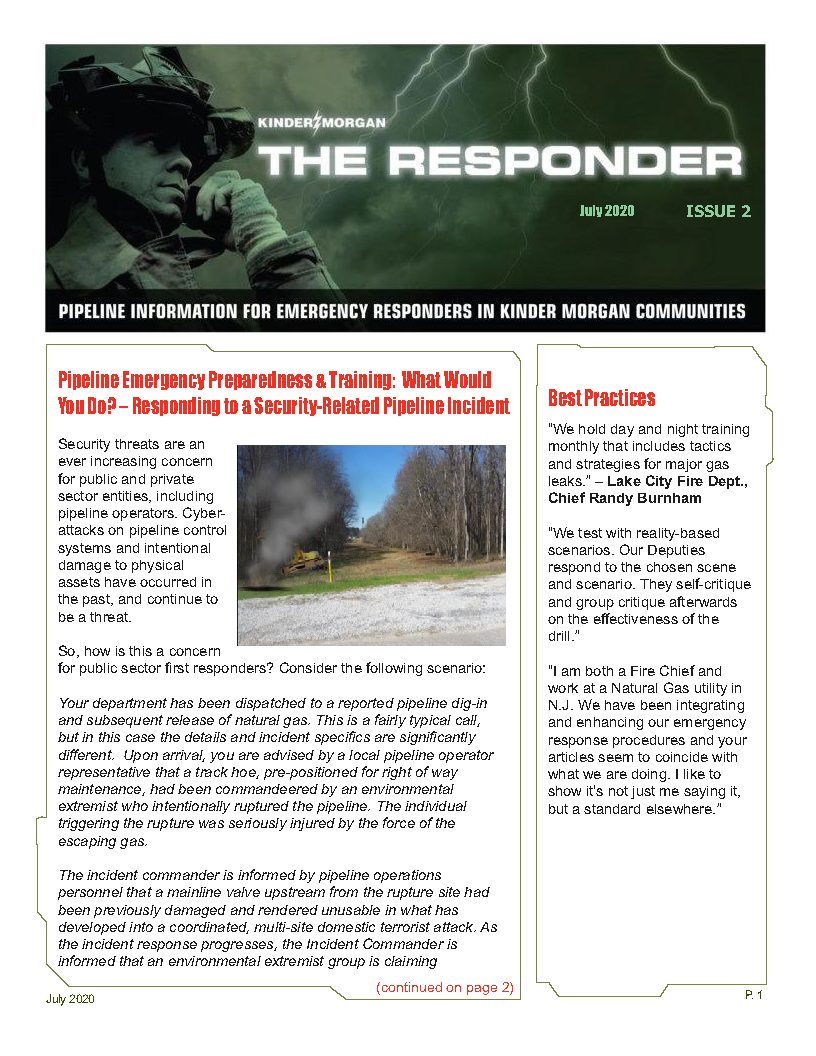
This issue contains the following articles: Pipeline Emergency Preparedness & Training: What Would You Do? – Responding to a Security-Related Pipeline Incident; Pipeline Emergency Response Tactics: Preparing for and Responding to Breakout Tank Fires; Overview of Pipeline Systems: a Detailed Look at Terminal Operations; Keeping Pipelines Safe/Practices & Protocols: the Role LEPCs and Local Government Play in Emergency Response Planning; Best Practices; First Responder Training Video Series
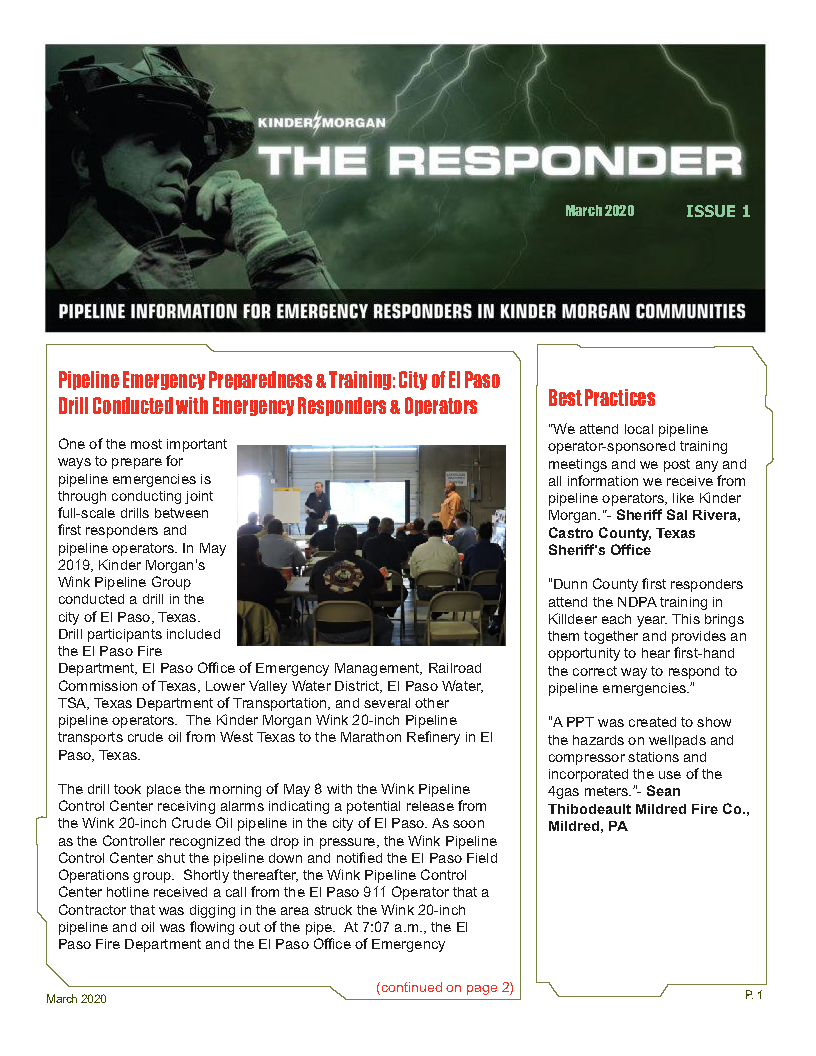
This issue contains the following articles: Pipeline Emergency Preparedness & Training: City of El Paso Drill Conducted with Emergency Responders & Operators; Pipeline Emergency Response Tactics: Scene Size-Up and Response to Seismic Events; Overview of Pipeline Systems: Overview of Liquid Petroleum Pipeline Systems; Keeping Pipelines Safe/Practices & Protocols: Pipeline Markers and Encroachments; Best Practices; First Responder Training Video Series
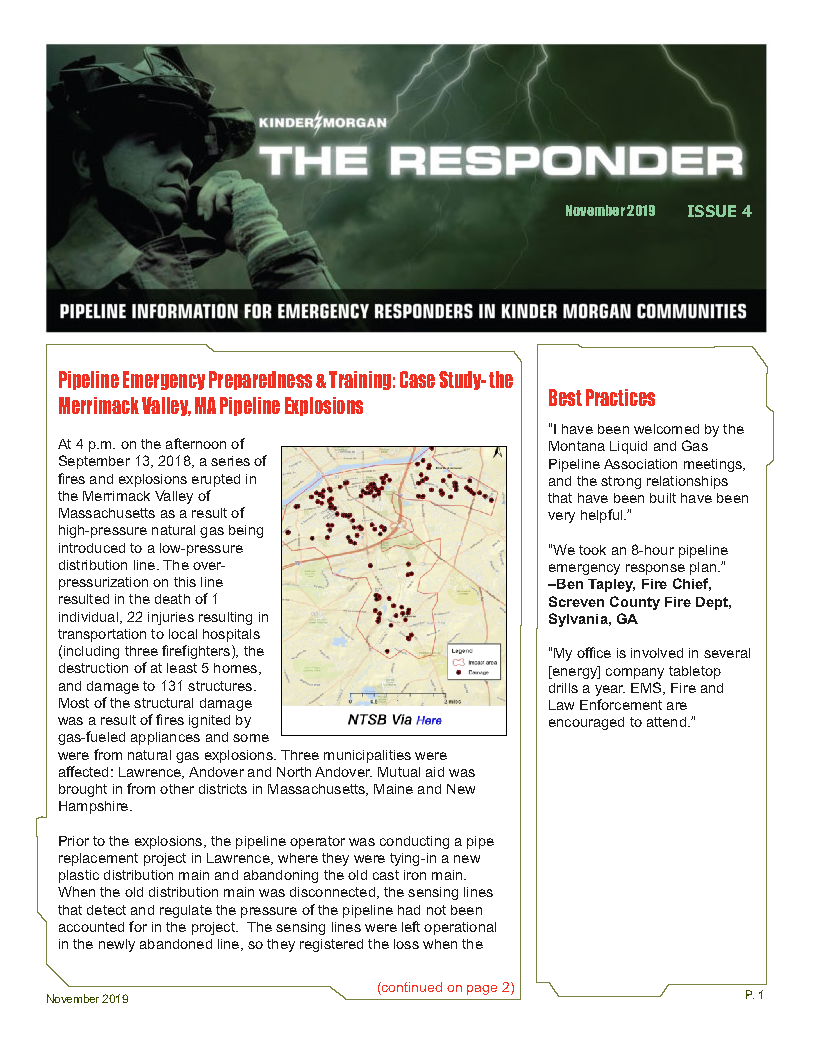
This issue contains the following articles: Pipeline Emergency Preparedness & Training: Case Study- the Merrimack Valley, MA Pipeline Explosions; Pipeline Emergency Response Tactics: Effectively Handling a Hazardous Liquids Spill; Overview of Pipeline Systems: Emergency Responder Spotlight- Rusk County Sheriff’s Office and Office of Emergency Management; Keeping Pipelines Safe/Practices & Protocols: Integrity Management Plans; Best Practices; First Responder Training Video Series
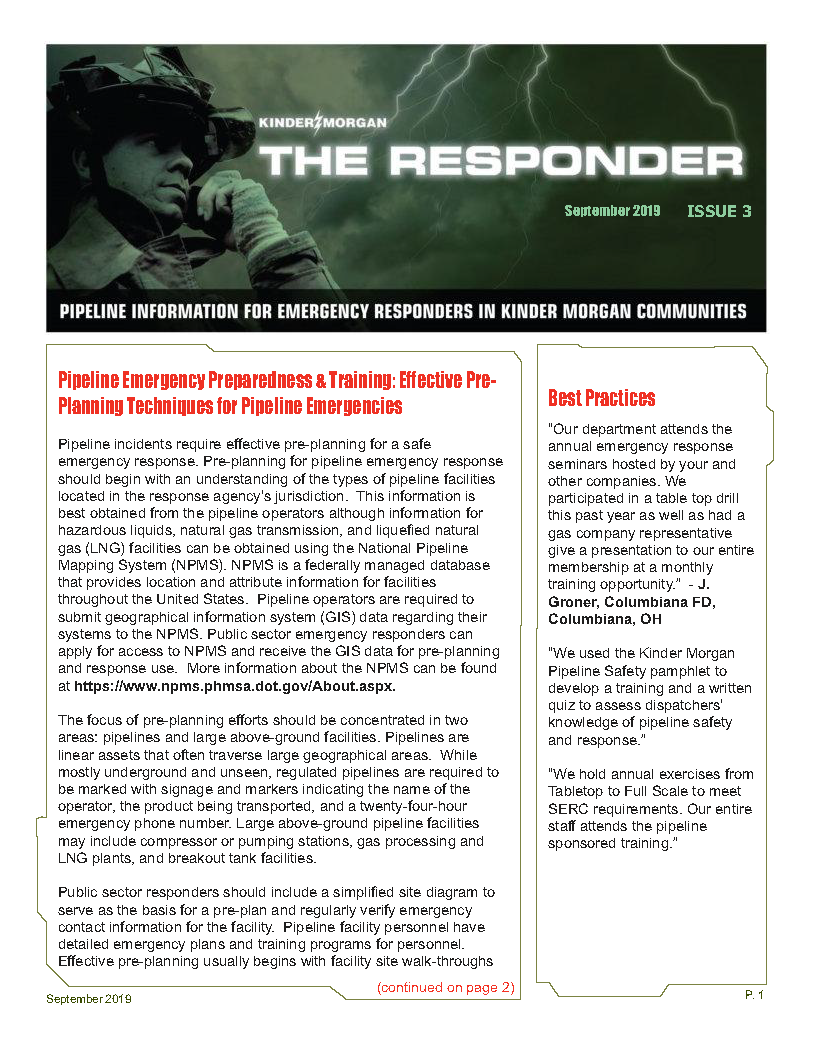
This issue contains the following articles: Pipeline Emergency Preparedness & Training: Effective Pre-Planning Techniques for Pipeline Emergencies; Pipeline Emergency Response Tactics: Responding to a Petroleum Pipeline Incident; Overview of Pipeline Systems: Overview of Pipeline Construction Process; Keeping Pipelines Safe/Practices & Protocols: Pipeline Inspection and Safety Tools; Best Practices; First Responder Training Video Series
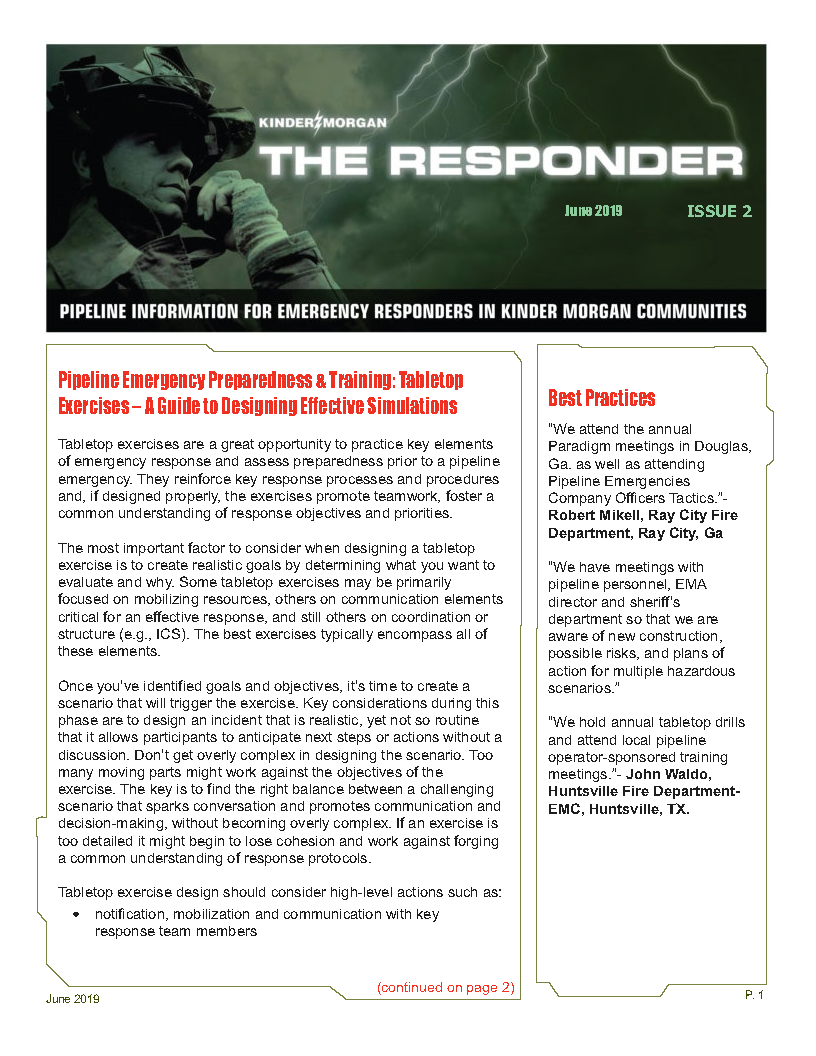
This issue contains the following articles: Pipeline Emergency Preparedness & Training: Tabletop Exercises – A Guide to Designing Effective Simulations; Pipeline Emergency Response Tactics: Responding to Natural Gas Escaping Inside a Building; Emergency Responder Spotlight: Madison County EMA’s Preparation for Pipeline Emergencies; Overview of Pipeline Systems: What’s in the Pipeline? - A Look at Commodities Transported via Pipeline; Best Practices; First Responder Training Video Series
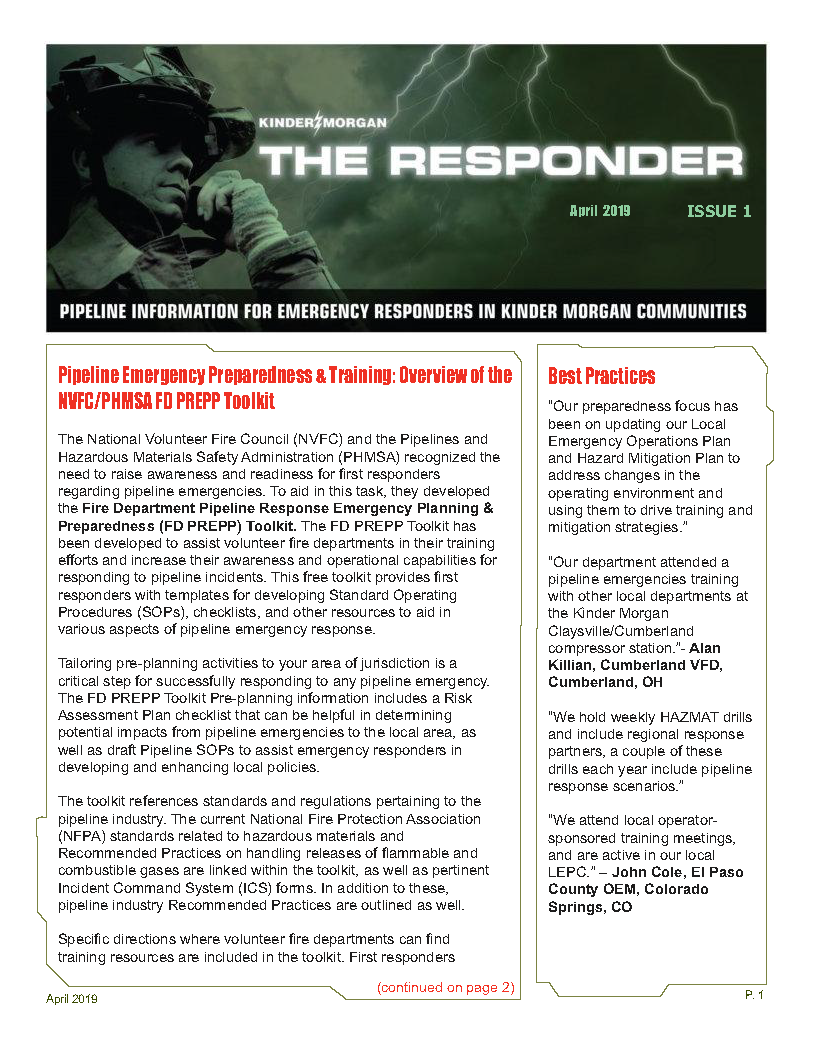
This issue contains the following articles: Pipeline Emergency Preparedness & Training: Overview of the NVFC/PHMSA FD PREPP Toolkit; Pipeline Emergency Response Tactics: Tailboard Scenario –Responding to a CO2; Overview of Pipeline Systems: Overview of Underground Natural Gas Storage; Pipeline Emergency Response Tactics: Overview of Pipeline Safety Measures and Systems; Best Practices; First Responder Training Video Series
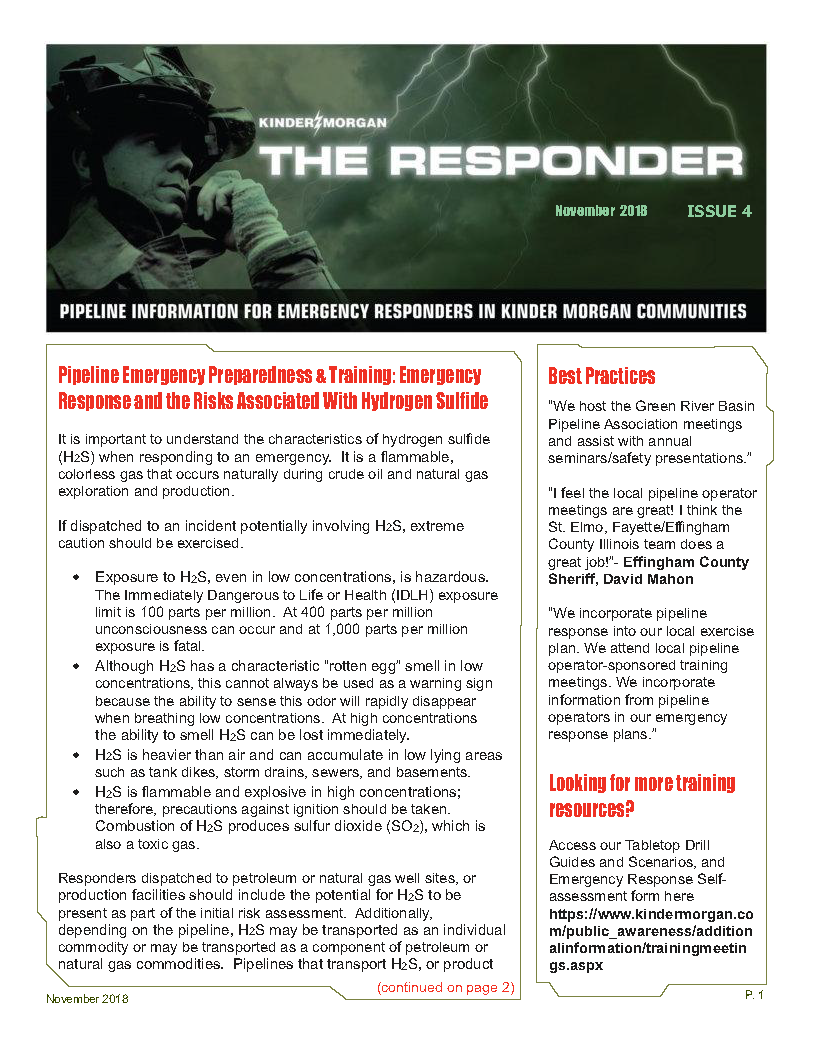
This issue contains the following articles: Pipeline Emergency Preparedness & Training: Emergency Response and the Risks Associated With Hydrogen Sulfide; Pipeline Emergency Response Tactics: Conducting Effective Scene Size-Up at a Natural Gas Incident; Overview of Pipeline Systems: Natural Gas Transmission Mainline Valves; Keeping Pipelines Safe/Practices & Protocols: Overview of the Incident Command System; Best Practices; First Responder Training Video Series
This issue contains the following articles: Pipeline Emergency Preparedness & Training: Response to a Terminal Incident; Pipeline Emergency Response Tactics: Effectively Handling a Hazardous Liquids Spill; Overview of Pipeline Systems: Liquefied Natural Gas Operations; Keeping Pipelines Safe/ Practices & Protocols: Right-of-Way Aerial and Ground Patrols; Best Practices; First Responder Training Video Series
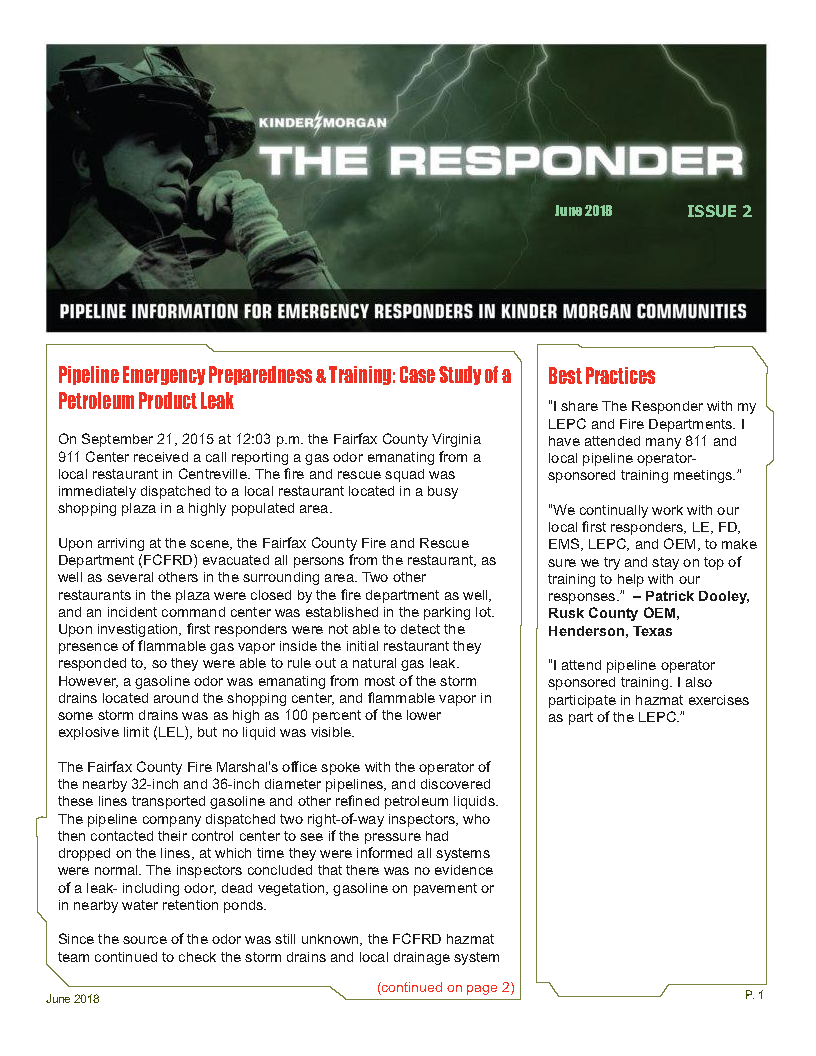
This issue contains the following articles: Pipeline Emergency Preparedness & Training: Case Study of a Petroleum Product Leak; Pipeline Emergency Response Tactics: Mitigating a Boiling Liquid Expanding Vapor Explosion (BLEVE); Overview of Pipeline Systems: Supervisory Control and Data Acquisition (SCADA) systems; Keeping Pipelines Safe/ Practices & Protocols: Cathodic Protection; Best Practices; First Responder Training Video Series
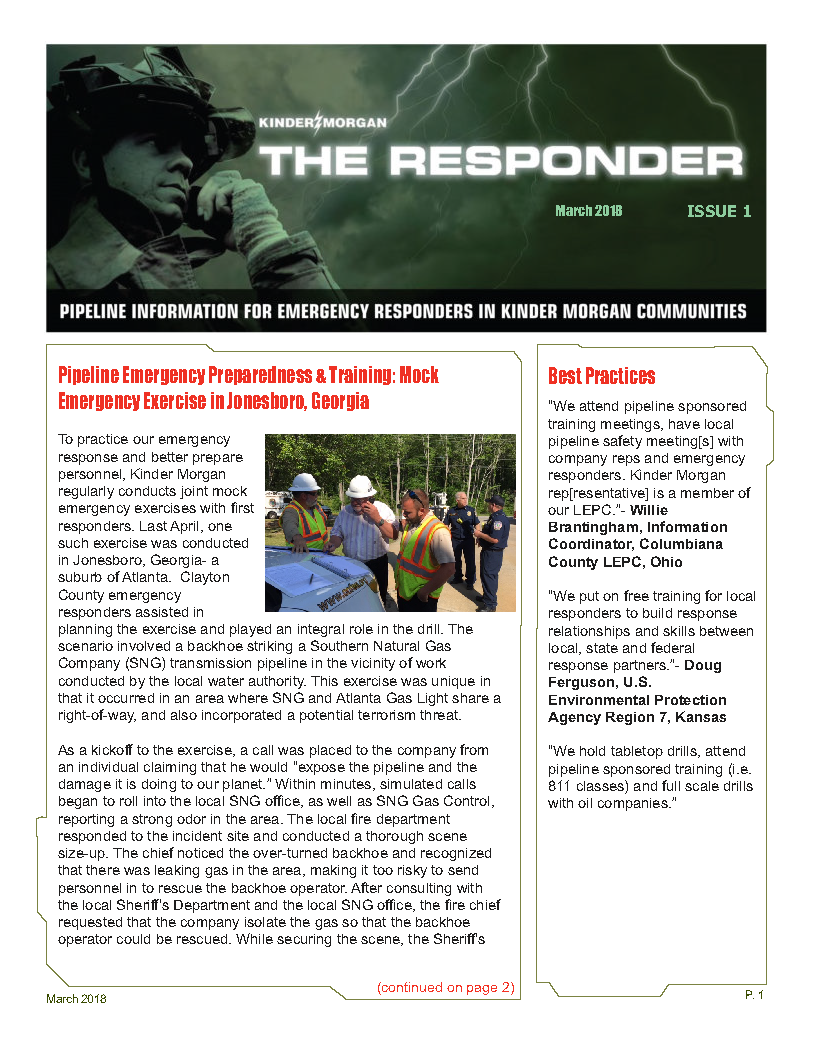
This issue contains the following articles: Pipeline Emergency Preparedness & Training: Mock Emergency Exercise in Jonesboro, Georgia; Tailboard Scenario: Responding to an HVL Liquids Pipeline Incident; Overview of Pipeline Systems: Pipeline Construction; Keeping Pipelines Safe/ Practices & Protocols: Wildfires and Pipelines; Best Practices; First Responder Training Video Series
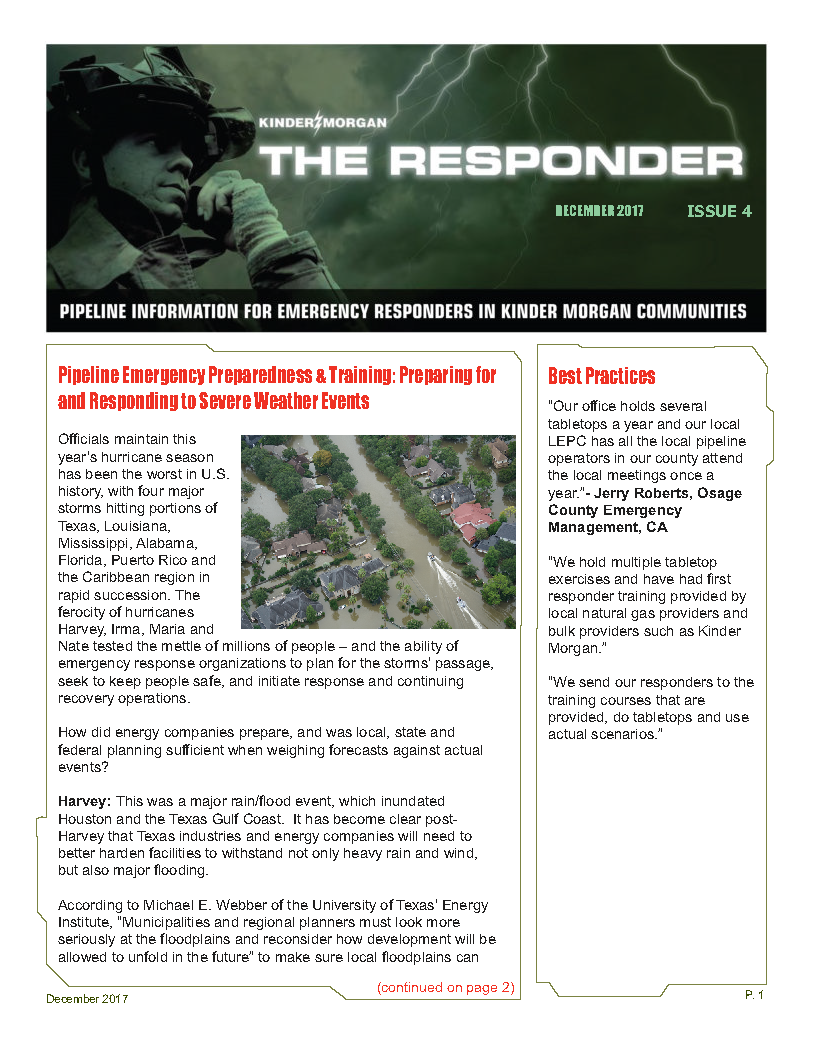
This issue contains the following articles: Pipeline Emergency Preparedness & Training: Preparing for and Responding to Severe Weather Events; Pipeline Emergency Response Tactics: Responding to a Carbon Dioxide Emergency; Overview of Pipeline Systems: Security related events in Pipelines and Emergency Responder Actions; Keeping Pipelines Safe/ Practices & Protocols: Benzene Awareness; Best Practices; First Responder Training Video Series
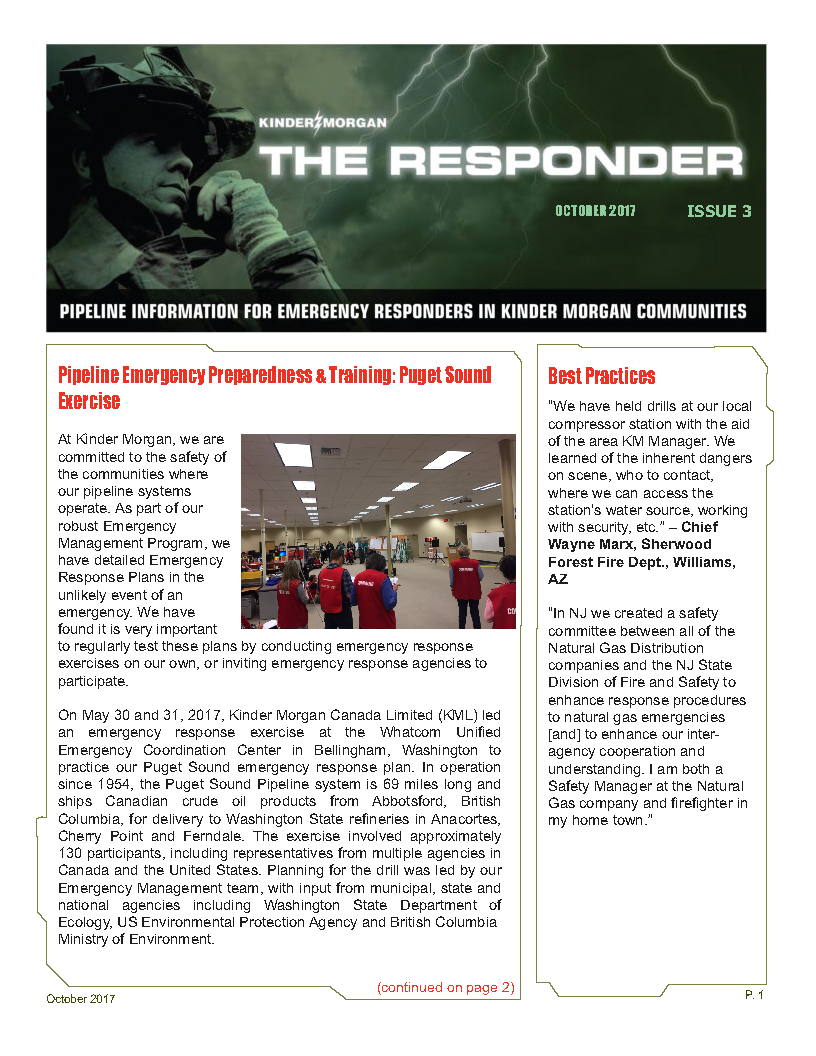
This issue contains the following articles: Pipeline Emergency Preparedness & Training: Puget Sound Exercise; Pipeline Emergency Response Tactics: Effective Crisis Communications during an Incident; Overview of Pipeline Systems: Differences between Liquid Petroleum and Natural Gas Pipelines; Keeping Pipelines Safe/Practices & Protocols: Building Relationships between Pipeline Personnel and Emergency Responders; Best Practices; First Responder Training Video Series
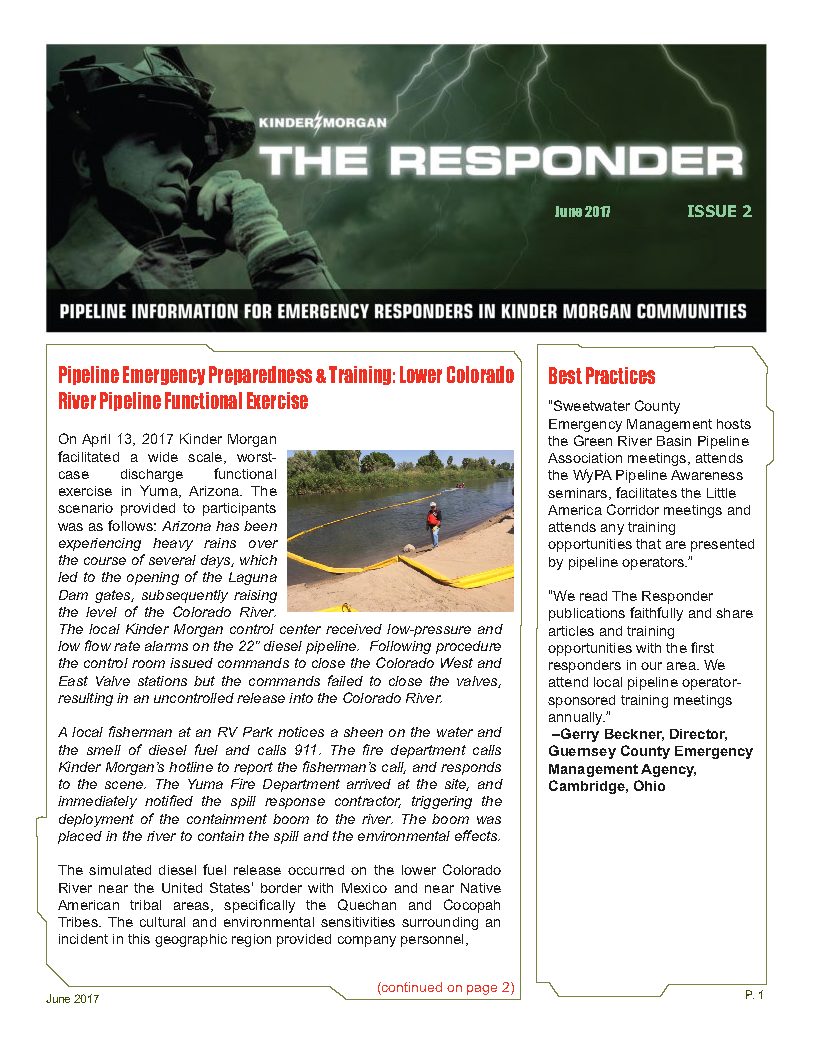
This issue contains the following articles: Pipeline Emergency Preparedness & Training: Lower Colorado River Pipeline Functional Exercise; Pipeline Emergency Response Tactics: Responding to a Natural Gas Pipeline Incident; Overview of Pipeline Systems: Emergency Responder’s Role in Pipeline Safety Management Systems as a Key Stakeholder; Keeping Pipelines Safe/Practices & Protocols: Integrity Management Programs-Pipeline Company Activities in High Consequence Areas; Best Practices; First Responder Training Video Series
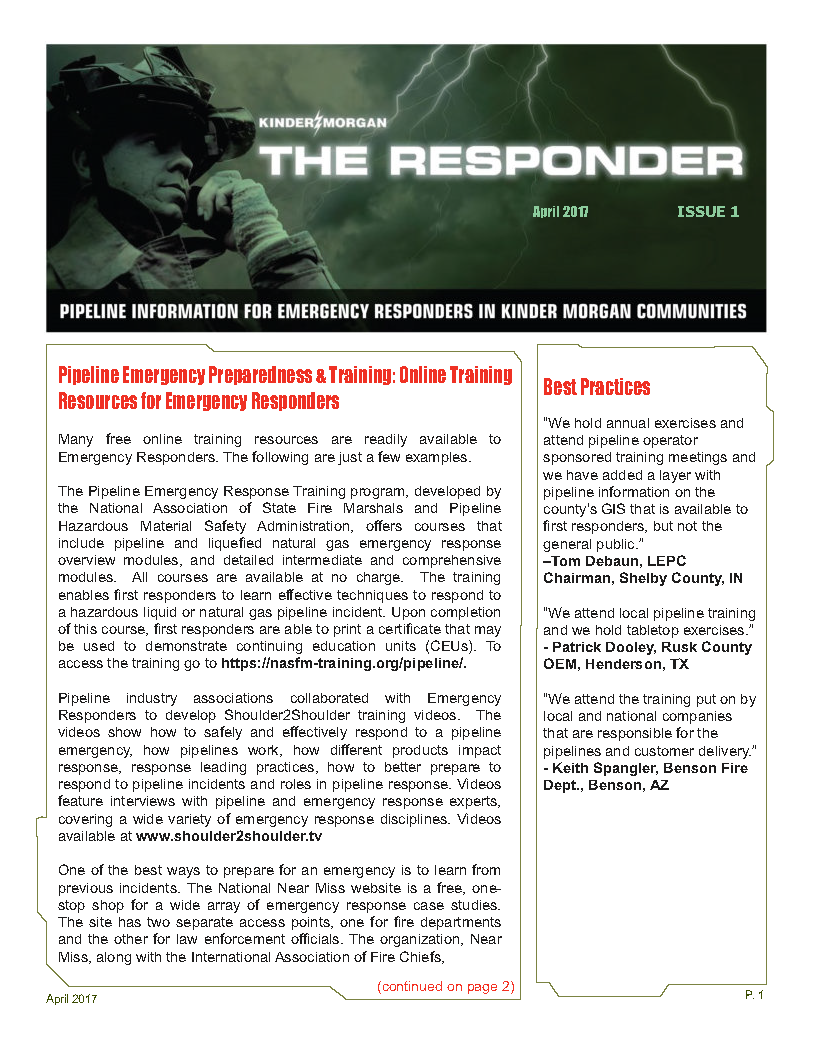
This issue contains the following articles: Pipeline Emergency Preparedness & Training: Online Training Resources for Emergency Responders; Pipeline Emergency Response Tactics: How Response Tactics Differ in Urban and Rural Areas; Overview of Pipeline Systems: Terminal Operations at a Glance; Keeping Pipelines Safe/Practices & Protocols: Public Awareness Program Outreach to Emergency Responders and Public Officials; Best Practices; NEW - First Responder Training Video Series
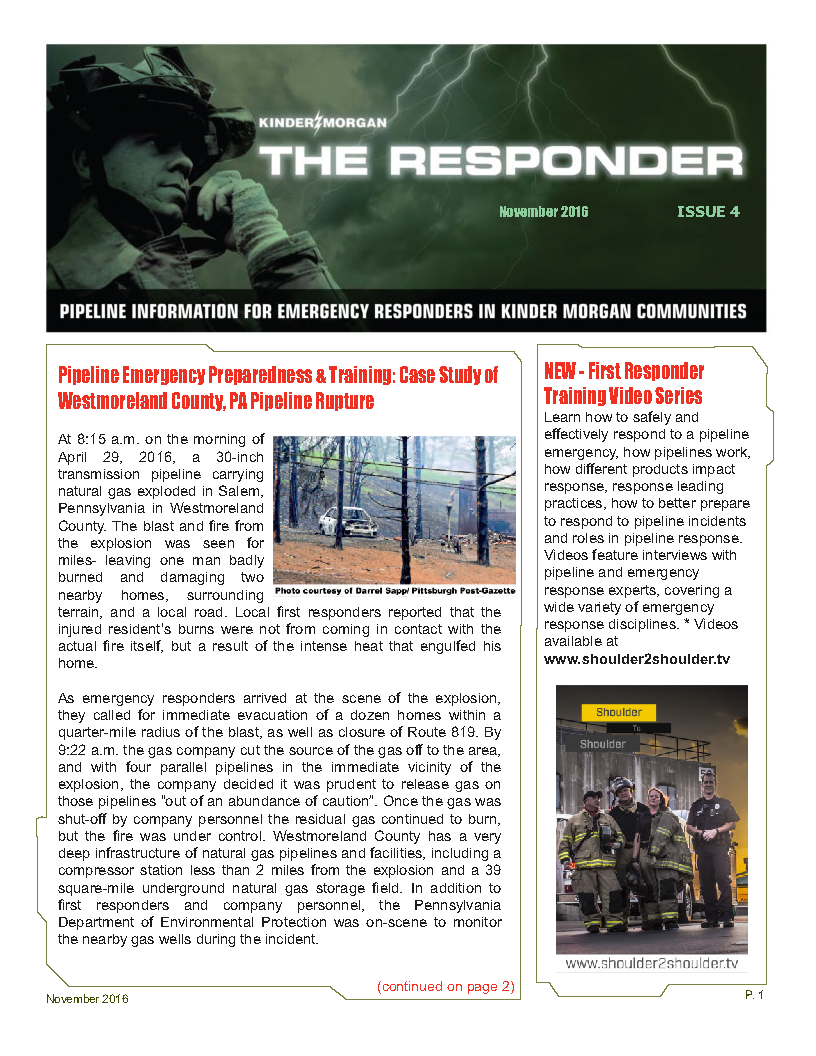
This issue contains the following articles: Pipeline Emergency Preparedness & Training: Case Study of Westmoreland County, PA Pipeline Rupture; Pipeline Emergency Response Tactics: Effective Scene Size-Up at a Terminals Incident; Overview of Pipeline Systems: Inside a Natural Gas Compressor Station; Keeping Pipelines Safe/ Practices & Protocols: Damage Prevention; Best Practices From Emergency Response Peers; NEW - First Responder Training Video Series
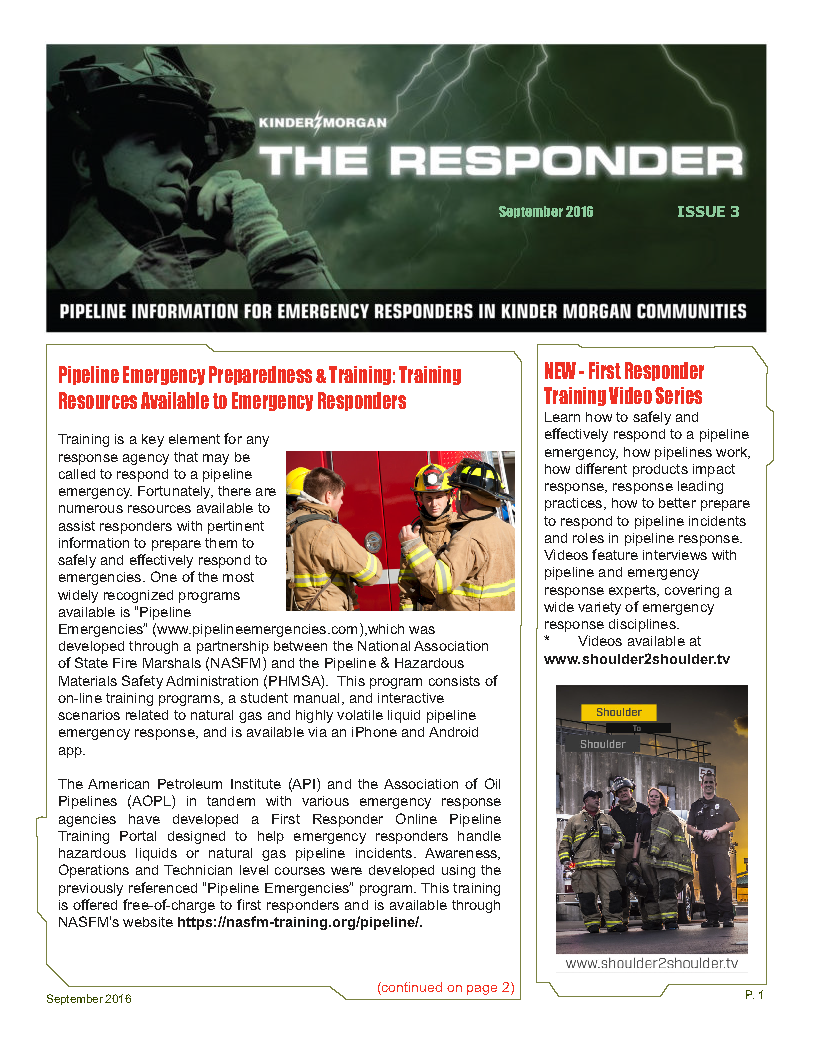
This issue contains the following articles: Pipeline Emergency Preparedness & Training: Training Resources Available to Emergency Responders; Pipeline Emergency Response Tactics: Responding to a Highly Volatile Liquids Pipeline Incident; Overview of Pipeline Systems: Natural Gas and Liquefied Petroleum Gas Odorization; Keeping Pipelines Safe/ Practices & Protocols: SCADA Systems- Working to Keep Pipelines Safe; NEW - First Responder Training Video Series; Best Practices From Emergency Response Peers
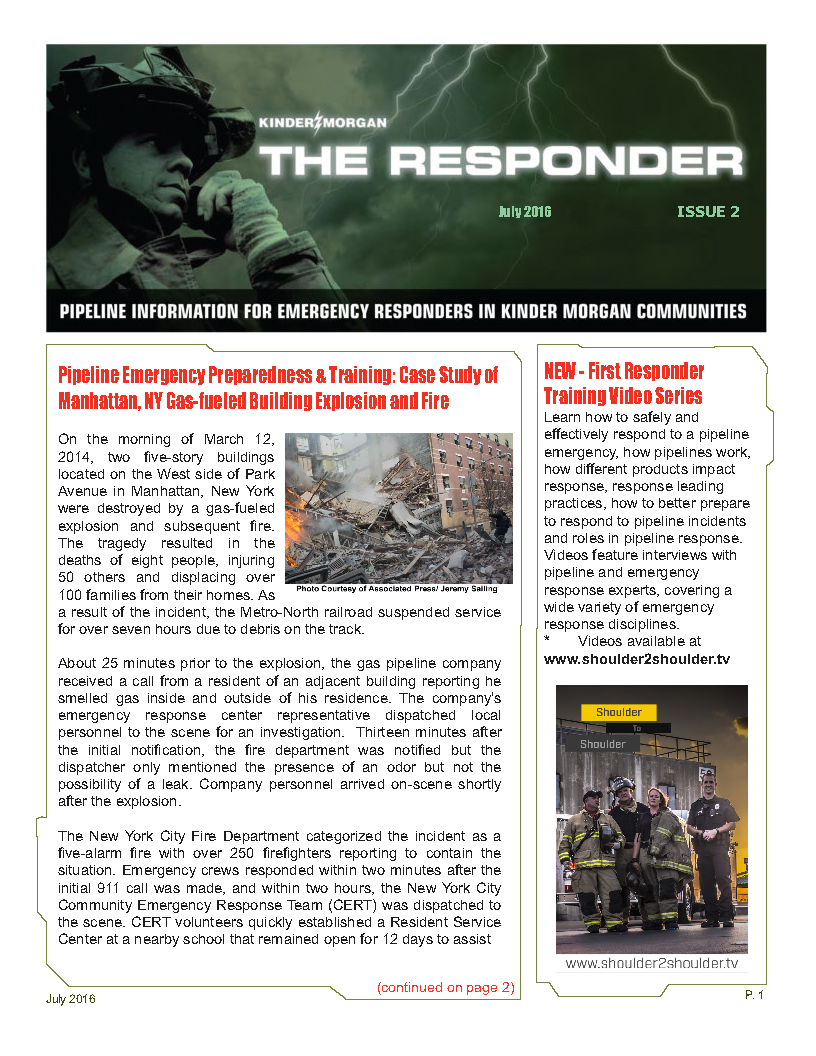
This issue contains the following articles: Pipeline Emergency Preparedness & Training: Case Study of Manhattan, NY Gas-fueled Building Explosion and Fire; Pipeline Emergency Response Tactics: What Would You Do? Responding to a Hazardous Liquids Pipeline Incident; Overview of Pipeline Systems: Pipeline Markers; Keeping Pipelines Safe/Practices & Protocols: The Role Emergency Responders Play in Pressure Testing and Pipeline Maintenance Activities; NEW - First Responder Training Video Series; Best Practices From Emergency Response Peers
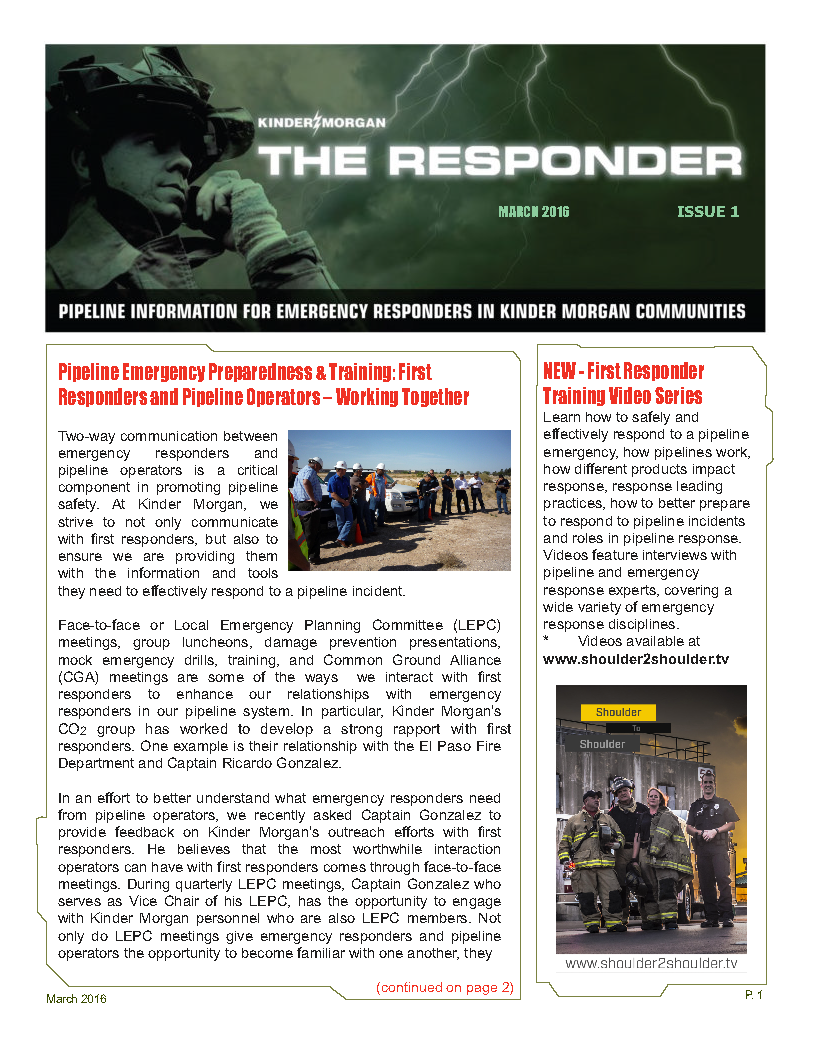
This issue contains the following articles: Pipeline Emergency Preparedness & Training: First Responders and Pipeline Operators – Working Together; Pipeline Emergency Response Tactics: Security-related Incident Procedures for Pipeline Personnel, Firefighters and Law Enforcement Officials; Overview of Pipeline Systems: Liquefied Natural Gas Transportation; Keeping Pipelines Safe/Practices & Protocols: Security at Remote Pipeline Sites; Best Practices From Emergency Response Peers
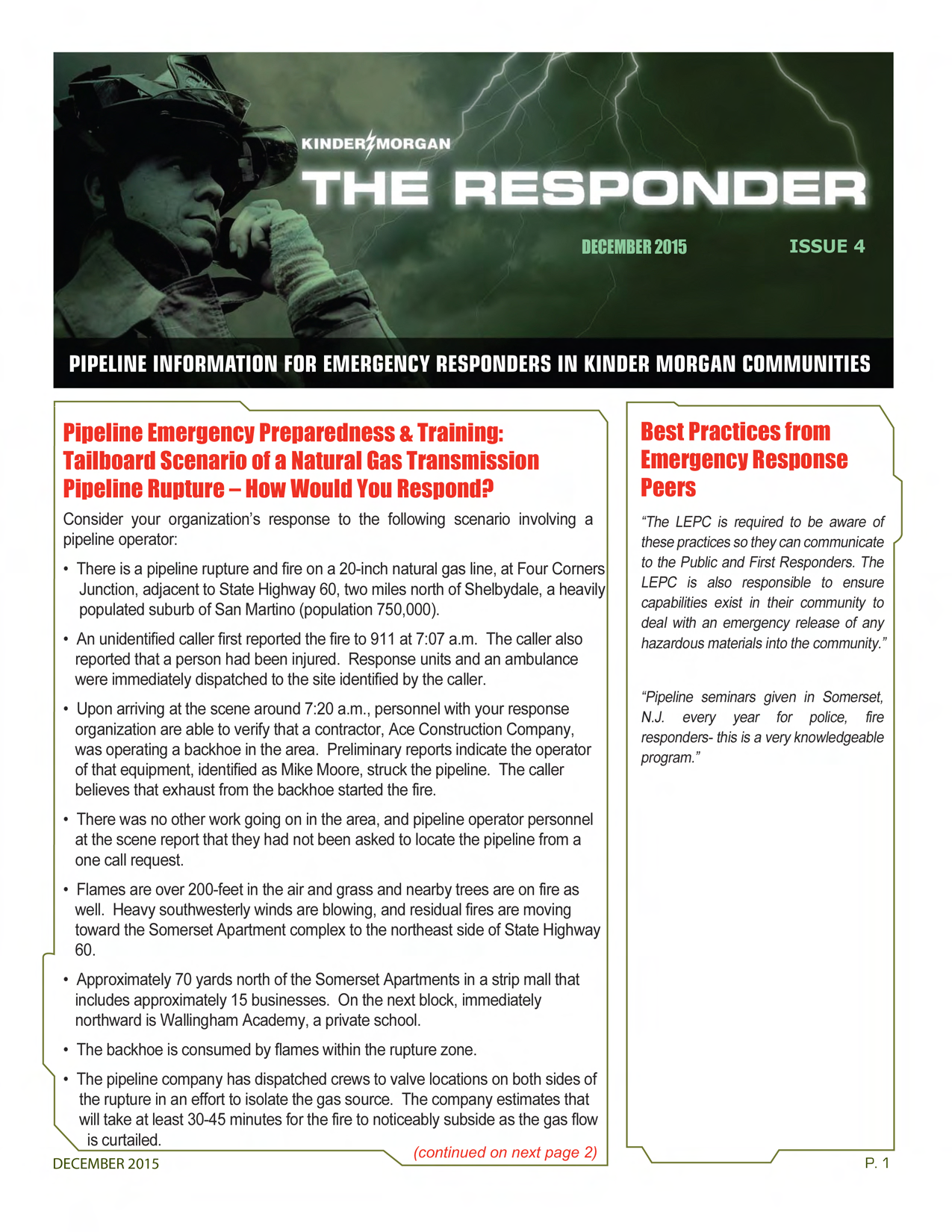
This issue contains the following articles: Pipeline Emergency Preparedness & Training: Tailboard Scenario of a Natural Gas Transmission Pipeline Rupture - How Would You Respond? Pipeline Emergency Response Tactics: Responding to a CO2 Pipeline Incident; Overview of Pipeline Systems: Design and Construction of a Pipeline System; Keeping Pipelines Safe/ Practices & Protocols: New Development near Pipelines- Awareness & Involvement; Best Practices From Emergency Response Peers
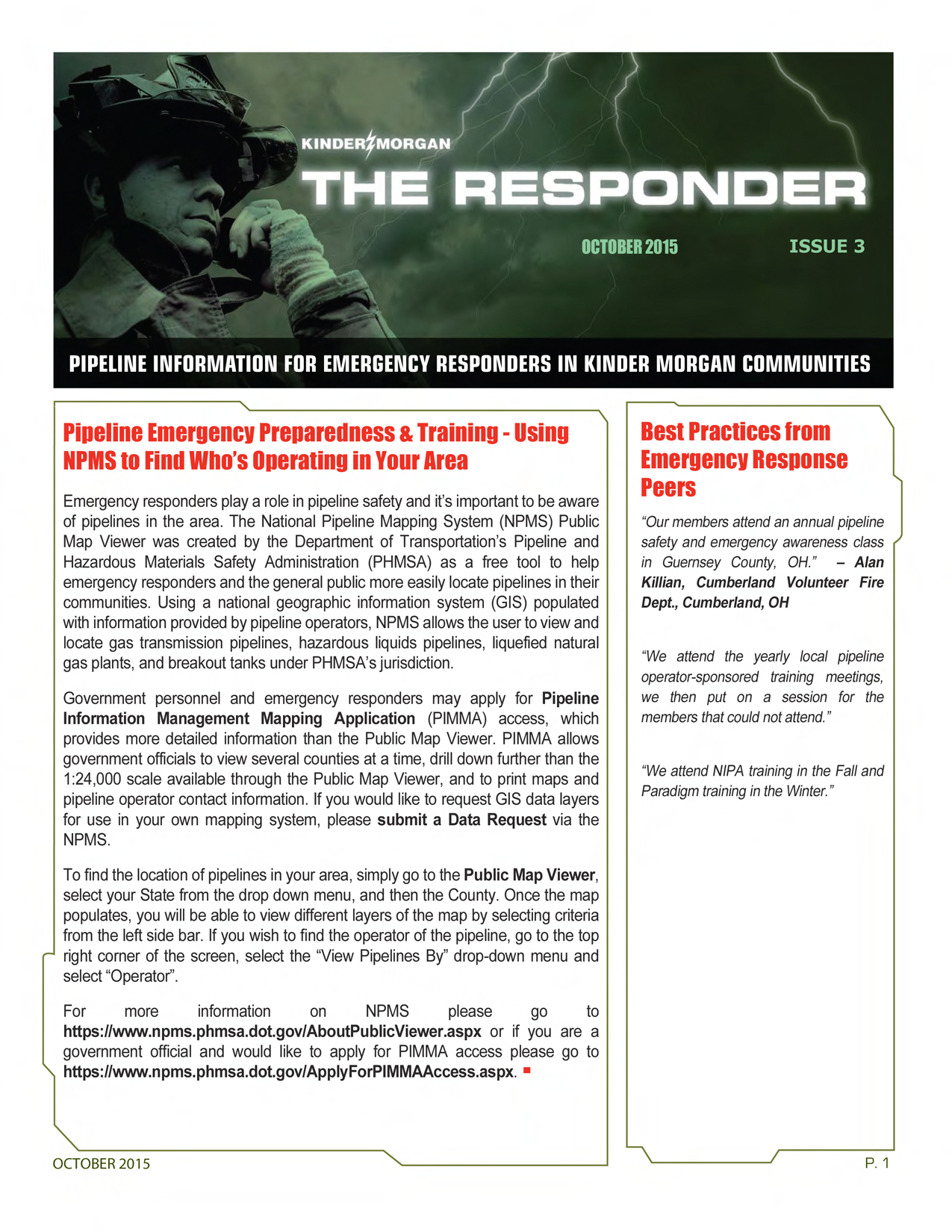
This issue contains the following articles: Pipeline Emergency Preparedness & Training: Using NPMS to Find Who's Operating in Your Area; Pipeline Emergency Response Tactics: What Would You Do? Response to a Terminals Operation Incident; Overview of Pipeline Systems: Moving Petroleum Products; Keeping Pipelines Safe/Practices & Protocols: Local Government’s Participation in Emergency Response Planning; Best Practices From Emergency Response Peers
This issue contains the following articles: Pipeline Emergency Response Tactics: Training Resources for Emergency Responders; Pipeline Emergency Preparedness & Training: Working Together at the Incident Scene- an Overview of the Incident Command System; Local Government's Involvement with Pipeline Safety; Keeping Pipelines Safe/Practices & Protocols: Kinder Morgan's Damage Prevention Program; Best Practices From Emergency Response
This issue contains the following articles: Pipeline Emergency Preparedness & Training: A Case Study- Sissonville, West Virginia Pipeline Rupture; Pipeline Emergency Response Tactics: How to Detect a Natural Gas Leak; Overview of Pipeline Systems: Tanker Truck Transportation of Oil and Refined Products; Keeping Pipelines Safe/Practices & Protocols: Pipeline Integrity Management in High Consequence Areas; Best Practices From Emergency Response Peers



_Page_1.jpg?ext=.jpg)
.png?lang=en-US&ext=.png)
.png?lang=en-US&ext=.png)
.png?lang=en-US&ext=.png)